Why the immune system treats food as a threat, and how to teach it otherwise.
We study the immune basis of food allergy and oral tolerance in people: who develops allergy in early life, why some patients respond to immunotherapy and others don't, and how T cells shape different forms of disease.
Four questions about allergy and tolerance
Each program works with samples from human volunteers and clinical trials, so what we learn can feed directly back into prevention and treatment.
Response to immunotherapy
More immunotherapies for food allergy are being tested than ever, and responses vary widely. Some patients gain lasting protection, others benefit less or can't tolerate treatment. We treat that variation as a chance to learn the immune mechanisms of tolerance, studying allergen-specific T cells, basophils, and other cells to find out why some people keep their benefit.
Early life susceptibility
Allergy often starts in the first year of life, with eczema followed by food allergy. Rates have climbed sharply over two decades and the reasons remain unclear. We look for factors that promote or protect against food allergy in infancy, including prenatal stress, and track how the immune system develops differently in children who become allergic.
T cells in food allergy
CD4⁺ helper T cells drive B cells to make IgE, the antibody behind immediate reactions such as peanut allergy, and support basophils, mast cells, and eosinophils. Food allergies differ from one another, and we study how differences in T cells give rise to IgE-mediated allergy, eosinophilic esophagitis, and FPIES, using cells from blood and tissue.
FPIES
Food protein-induced enterocolitis syndrome is a non-IgE-mediated food allergy, most common in infants but also seen in adults, that causes severe vomiting after the trigger food. In a first-of-its-kind study we are testing a low-dose feeding test that should be safer and easier than current challenges, and following CD4⁺ T cells and their interaction with the gut during the test.
Trials and cohorts we work with
Our mechanistic work is built into these studies of allergy prevention and treatment.
CAFETERIA
Sub-threshold dietary peanut in children with high-threshold peanut allergy.
NCT03907397 ↗The people in the lab

Cecilia Berin
Cecilia received her PhD from McMaster University and did her postdoc at the University of California, San Diego. After 20+ years at the Icahn School of Medicine at Mount Sinai, she joined Northwestern in 2022. She is passionate about translational research in food allergy, and mentoring. Outside of work, it’s all about her dogs and gardening.

Abby Gubernat
Abby obtained their BSc from the University of Florida. They spent three years at the University of Pittsburgh studying HIV/TB co-infection immunology, then joined the Berin Lab in January 2023. As a proud member of the LGBTQ+ community, they are passionate about promoting diversity in STEM. Outside of the lab, they love video games, playing sports, and their cat.

Brianna Zientara, BA
Brianna obtained her BA in Biochemistry and Spanish from Augustana College. Her personal mantra is to perpetually seek to learn. She is a proud member of the LGBTQ+ community. Her interests include rock/metal music, anything Halloween-y, and her two cats who are her entire world.

Tiffany Valcarcel
Tiffany obtained her BA in Natural Sciences from Fordham University and her MS in Forensic Science at John Jay College of Criminal Justice. She spent 2 years at the Icahn School of Medicine at Mount Sinai before joining the Berin Lab at Northwestern University in September 2023. In her free time, she enjoys exploring the city through food and sightseeing and loves to spend time with her newly adopted cat, Coconut.
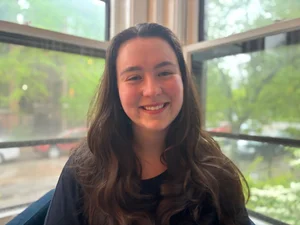
Grace Miklaszewski
Grace received a BSc in Biology from Xavier University. A life-long Chicagoan, she returned home to work at Northwestern in 2021, studying the comorbidity between asthma and metabolic disorders then joined with the Berin lab in 2025. Outside of work, she enjoys cooking, movies from the 80s-90s, and traveling!

Helen Lyu
Helen obtained her BA in Chemistry from The Ohio State University and joined the Berin Laboratory in 2026. She is passionate about translational medicine and understanding the role of the immune system in human disease and responses to therapy. In her free time, she enjoys snowboarding and horseback riding.
Recent papers
Research articles and reviews from 2023 onward. Older work is on PubMed.
- 2026The impact of dupilumab treatment on the management of comorbid food allergyHua A, Dong S, Kim KY, Berin MC, Kumar R, Lang AJ Allergy Clin Immunol Pract Online ahead of printdoi:10.1016/j.jaip.2026.09.012
- 2026Novel biomarkers and diagnostic tools in food allergyBunyavanich S, Akdis M, Berin MC, … Sampson HAAllergy 81(7):2276–2289doi:10.1111/all.70133
- 2025Protocol design for the ACTIVATE clinical trial: Exposure to vaginal microbiome in cesarean-delivered infants at high risk for allergiesTsuang AJ, Chung SA, Wheatley LM, … Berin MC, … Sampson HAJ Allergy Clin Immunol Glob 4(4):100558doi:10.1016/j.jacig.2025.100558
- 2025Psychological stress-induced local immune response to food antigens increases pain signaling across the gut in miceAguilera-Lizarraga J, Lopez-Lopez C, Jaramillo-Polanco J, … Berin MC, … Reed DEGastroenterology 169(1):104–118doi:10.1053/j.gastro.2025.01.246
- 2025Oral and gut microbial hubs associated with reaction threshold interact with circulating immune factors in peanut allergyZhang L, Chun Y, Grishina G, … Berin MC, Bunyavanich SAllergy 80(10):2800–2809doi:10.1111/all.16481
- 2025A phenotypically distinct human Th2 cell subpopulation is associated with development of allergic disorders in infancyPizzarello CR, Jackson CM, Herman K, … Berin MC, … Järvinen KMAllergy 80(4):949–964doi:10.1111/all.16489
- 2025Differential T follicular helper cell phenotypes distinguish IgE-mediated milk allergy from eosinophilic esophagitis in childrenLozano-Ojalvo D, Chen X, Kazmi W, … Berin MCJ Allergy Clin Immunol 155(3):909–922doi:10.1016/j.jaci.2024.09.024
- 2025Peanut oral immunotherapy in children with high-threshold peanut allergySicherer SH, Bunyavanich S, Berin MC, … Wang JNEJM Evidence 4(3):EVIDoa2400306doi:10.1056/EVIDoa2400306
- 2025Current status and future directions in food protein-induced enterocolitis syndrome: An NIAID workshop reportNowak-Wegrzyn A, Sicherer SH, Akin C, … Berin MC, … Togias AJ Allergy Clin Immunol 155(2):336–356doi:10.1016/j.jaci.2024.10.022
- 2024Contribution of T cell subsets to different food allergic diseasesHung L, Zientara B, Berin MCImmunol Rev 326(1):35–47doi:10.1111/imr.13368
- 2024Joint transcriptomic and cytometric study of children with peanut allergy reveals molecular and cellular cross talk in reaction thresholdsZhang L, Chun Y, Arditi Z, … Berin MC, Bunyavanich SJ Allergy Clin Immunol 153(6):1721–1728doi:10.1016/j.jaci.2023.12.028
- 2023JAK1 inhibition with abrocitinib decreases allergen-specific basophil and T-cell activation in pediatric peanut allergyRamsey N, Kazmi W, Phelan M, Lozano-Ojalvo D, Berin MCJ Allergy Clin Immunol Glob 2(3):100103doi:10.1016/j.jacig.2023.100103
- 2023Targeting type 2 immunity and the future of food allergy treatmentBerin MCJ Exp Med 220(4):e20221104doi:10.1084/jem.20221104
- 2023Allergen recognition by specific effector Th2 cells enables IL-2-dependent activation of regulatory T-cell responses in humansLozano-Ojalvo D, Tyler SR, Aranda CJ, … Berin MCAllergy 78(3):697–713doi:10.1111/all.15512
- 2023Untargeted serum metabolomic analysis reveals a role for purinergic signaling in FPIESLozano-Ojalvo D, Chen X, Dunkin D, … Berin MCJ Allergy Clin Immunol 151(3):797–802doi:10.1016/j.jaci.2022.09.035
- 2023Oral tolerance and oral immunotherapy for food allergy: Evidence for common mechanisms?Kazmi W, Berin MCCell Immunol 383:104650doi:10.1016/j.cellimm.2022.104650